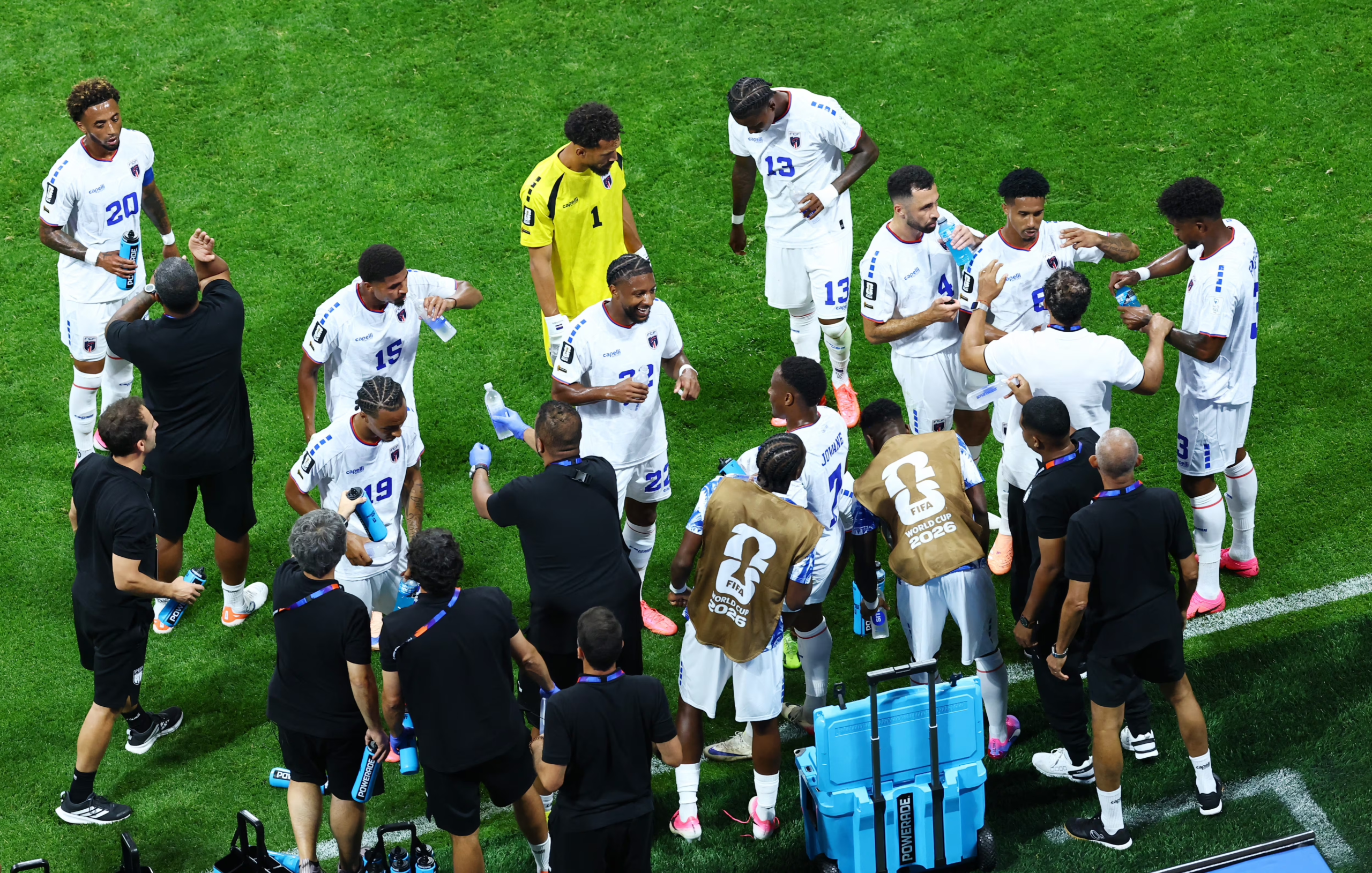
The FIFA hydration breaks have become one of the most hotly debated rules at the running FIFA World Cup, with the officials of the governing body justifying the policy as it comes under fire from players, coaches and fans.
FIFA president Gianni Infantino has restated that the three-minute stoppages, which are to be played in the 22nd and 67th minute of each game, are purely for player welfare reasons. The breaks were introduced to help prevent the effects of hot temperatures in venues all over North America and to help the body recover from a shortened tournament schedule.
Regardless of these plans, the measure has sparked a great deal of debate. But critics say the extra interruptions provide greater commercial opportunities for television stations, and also interrupt the flow of the games. But Infantino brushed aside such comments, saying that FIFA does not make extra money during those gaps – with all commercial deals having been worked out beforehand before the tournament.
Tactically, the breaks have added a new dimension to the in-game management. Now coaches make use of these breaks to regroup and redraft plans, changing the football industry’s usual pace along the way. England’s Thomas Tuchel, who has been appointed to replace Steve McClaren as coach, questioned the rule, which he said “interrupts and changes the identity” of games; and Uruguay’s Marcelo Bielsa said a rule that breaks down the essence of the sport was a “problem.
There is also some conditional support in the football world. Spain coach Luis de la Fuente and Netherlands captain Virgil van Dijk admitted that hydration breaks should be used in extreme heat situations but didn’t know how effective they will be in different climates and stadiums.