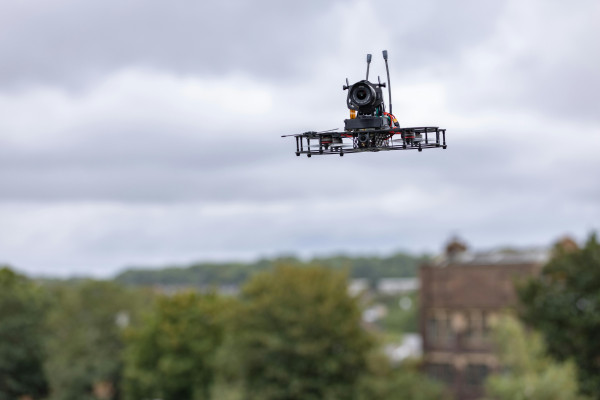
As the World Cup draws near to the United States, safety planners are increasingly concerned about the threat of drones, especially from FIFA. Now the focus is on what to do to secure stadiums, fan zones and team facilities from the threat of drone activity. It’s not only attacks that are intentional. Even recreational drone users who record social media videos can end up in a hazardous situation, experts say. An unsecured device in the wrong location can cause a disruption of the game or panic in a crowd. Experts point to the speed and low cost of drones and the impact on the risk level.
A good drone will fly for a relative long distance within minutes. This creates little time for police to respond once it is identified. The traditional security systems were not developed to deal with such high speed air objects. Industry sources say there are a range of threats from the harmless to the more serious, such as surveillance or match disruption via drones.
That complicates things when it comes to planning: Not all drones are necessarily bad, but each one is a potential danger that must be taken seriously. Now officials work in various cities and agencies to establish a coordinated response system. This involves the use of detection technology, limited airspace monitoring, and swift interception measures.
The difficulty is even greater since matches will be played in various venues with various security frameworks. It’s a scene that highlights the evolution of sports security in today’s world. The FIFA World Cup is no longer a game of football. It’s also a risk management of new age risk that may affect global events.